Overview
D-GAM turns static city-planning feedback forms into adaptive, game-based experiences that keep residents engaged. It’s built around four independent schemas — reward, feedback, project, and user — so it can be reconfigured for different civic contexts without a redesign. Two playtest-and-iterate cycles took it from a 67.46 to a 76.0 System Usability Scale score.
- 76.0
- Final SUS score
- +8.54
- Improvement
- 37
- Tools audited
- 3
- Papers published
- 90%
- Increase in user engagement
Grade B — up from 67.46
Across two iterations
17 analysed in depth
Peer reviewed
The problem
D-GAM framework was built to answer one question: Can gamification enhance user engagement and motivation in participatory processes?
01. Problem Identification
What existing tools get wrong
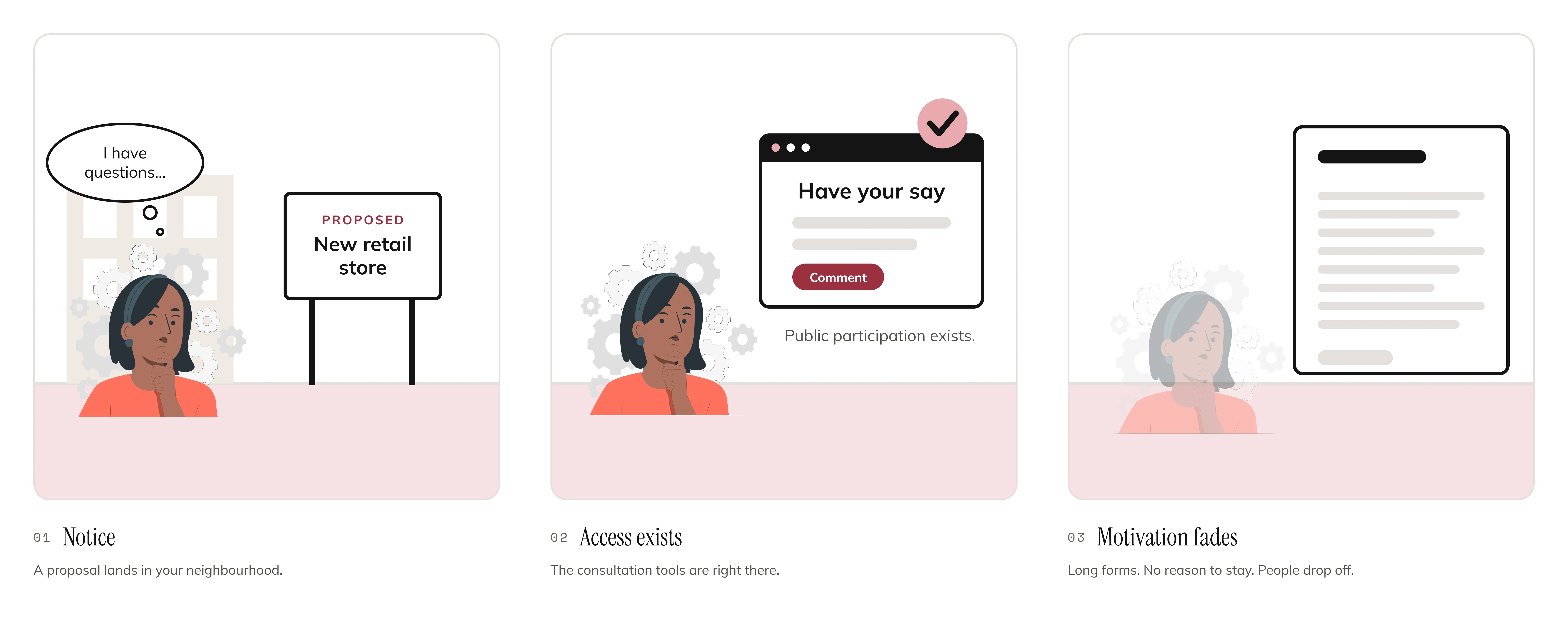
To cater the problem a review of 37 civic engagement and gamification tools, narrowed to 17 targeting general public participation, revealed a consistent pattern. Tools that attract users rarely sustain them. When gamification existed at all, it was applied at the system level: the same points and badges for every project, regardless of context or stakeholder.
| Tool name | Domain / context | Game mechanics used | Target audience |
|---|---|---|---|
| Foldit | Scientific Research | Puzzle-solving, Competition | General Public, Science Enthusiasts |
| ESP Game | Image Tagging for AI | Points, Time Constraints, Partner Matching | General Public |
| Metadata Games | Cultural Heritage Archiving | Points, Leaderboards, Collaborative Tagging | Museum Visitors, Archivists, General Public |
| … 13 more rows |
- Urban Planning
- Urban Design
- Civic Engagement
Gaps identified
Gap 01
Fixed system-wide gamification
Gap 02
No mechanism for sustained engagement
Gap 03
Accessibility of gamified tools
Gap 04
Gamification as superficial engagement
Research grounding
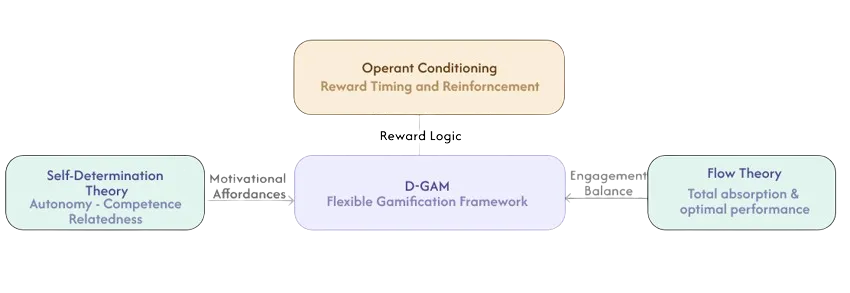
This is the step where the foundations of the framework began. The framework was grounded in three theories.
- 01Self-Determination Theory defined what meaningful motivation requires: autonomy, competence, and relatedness.
- 02Operant conditioning explained reward timing.
- 03Flow theory explained how to keep task complexity matched to user capability.
02. Process
Four phases, from a fixed task-based approach to an adaptable schema process.
Literature review & first prototype
37 tools reviewed · 17 in depthFocus group evaluation
n=7 · SUS 67.46Framework formation: four schemas
Task-free · 4 schemasRedesign & user study
n=10 · SUS 76.0→Each study fed the next design. Findings from the focus group shaped the schema-based redesign.
03. Design
From idea to wireframe to UI — V1
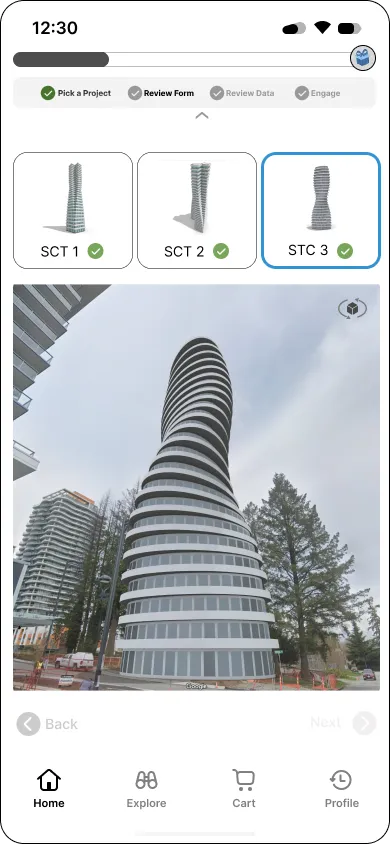
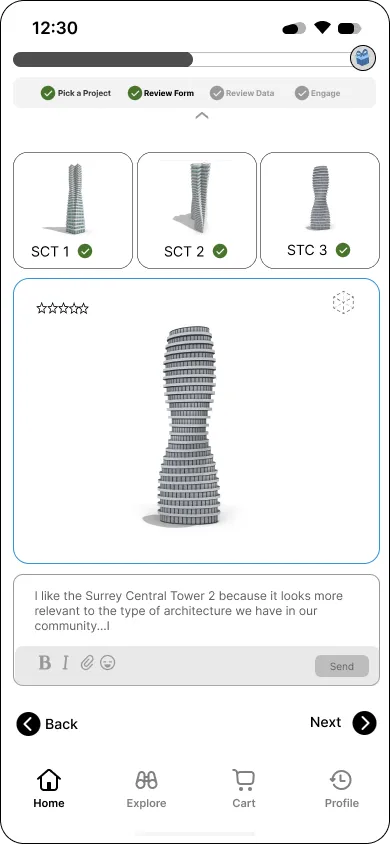
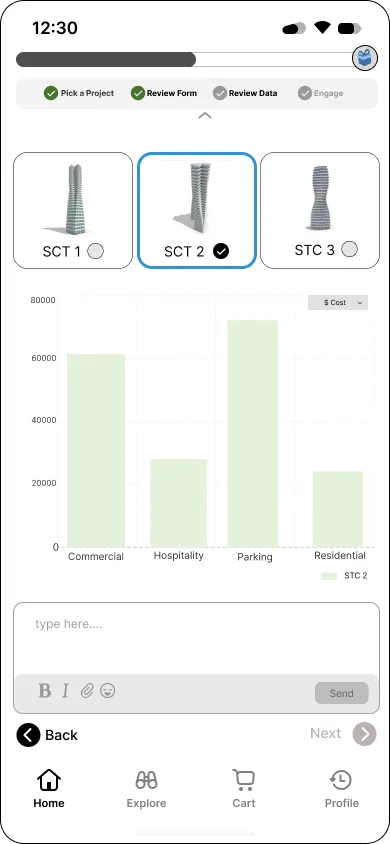
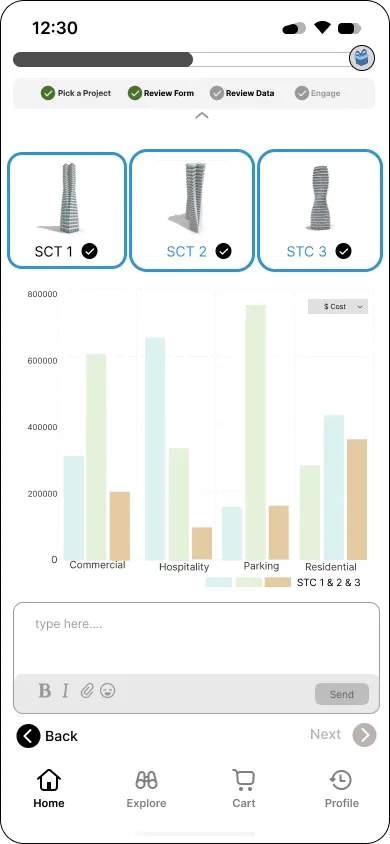
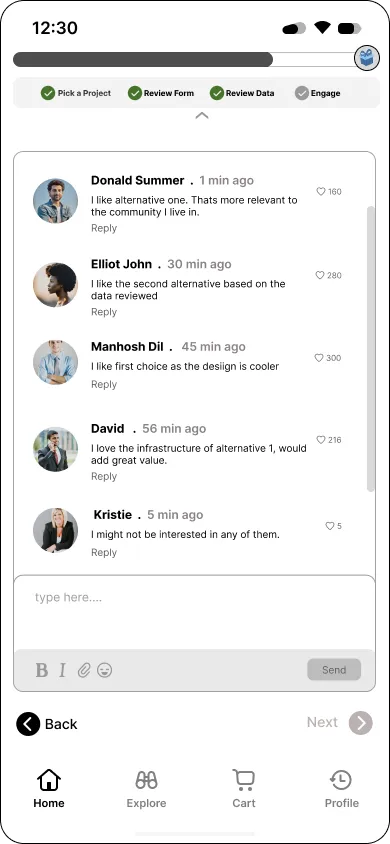
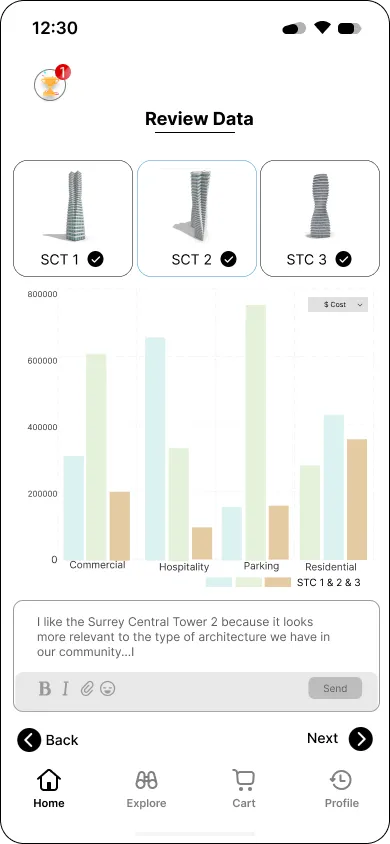
The first prototype followed a task-based approach. Users moved through a structured four step review: select a project, explore the design in 3D and AR, review performance data, engage in discussion, earning points and rewards at each stage. This was the version taken into the focus group study.
01
Select a project
02
Explore in 3D & AR
03
Review data
04
Discuss & earn rewards
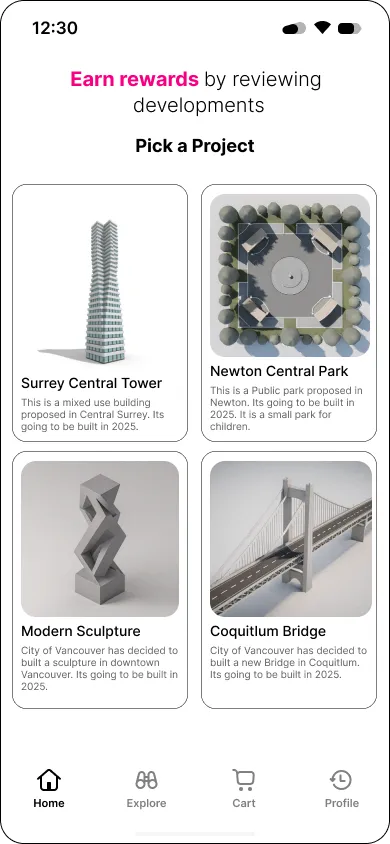
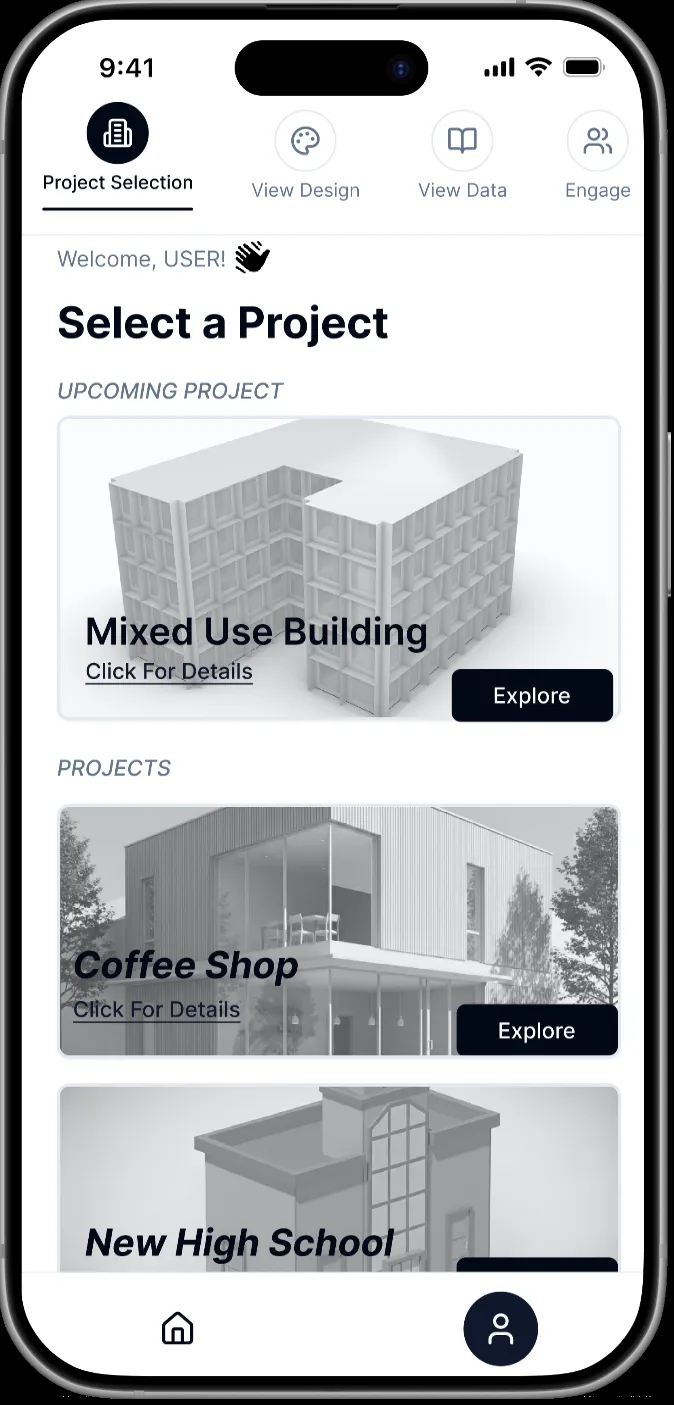
- Project selection
- AR view
- Dedicated feedback
- Data view
- Data comparison
- Engagement discourse
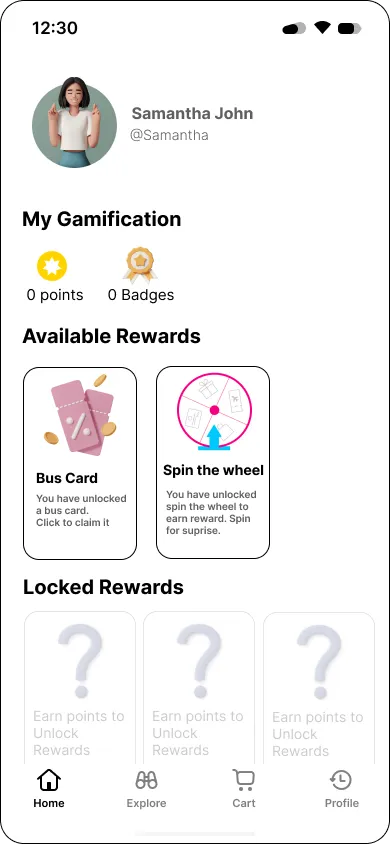
- Toggled gamification
- Reward band
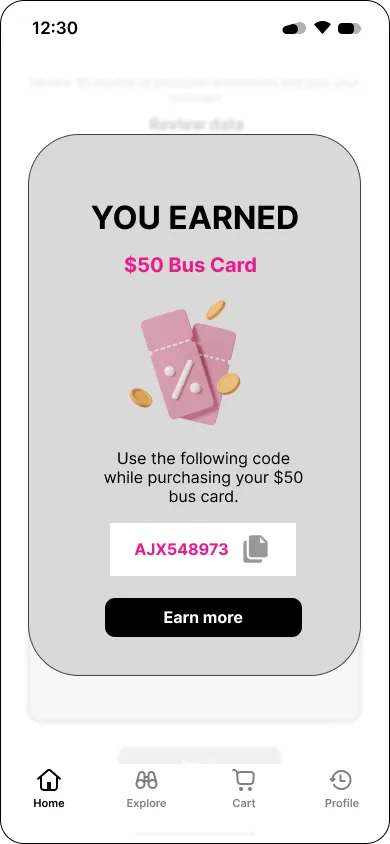
- Surprise reward notification
- History
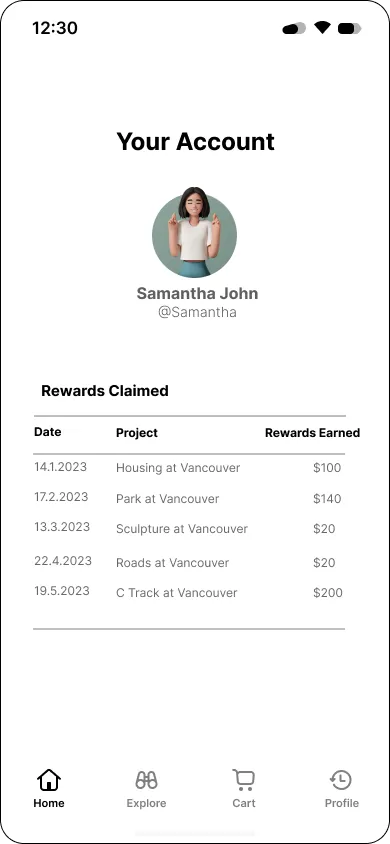
Initial focus group study
Based on the initial task-based prototype, a focus group study was carried out which included seven participants who were given an overview and interacted with the prototype. Four themes emerged that fundamentally changed the direction of the framework.

Four themes that redirected the framework
Rewards motivated engagement but lacked transparency
I would like to know about the potential rewards in the beginning — it confuses me why there is a definite and an indefinite reward.
Task rigidity caused fatigue
I have to add a comment under every section, which is a tiring process. Rather, I would prefer adding a combined comment at the end.
Intrinsic motivation mattered as much as extrinsic rewards
Knowing my feedback will make a difference motivates me more than a material reward.
Users needed freedom to explore non-linearly
I should not be forced to complete the tasks in order to earn rewards. I may switch to different tasks.
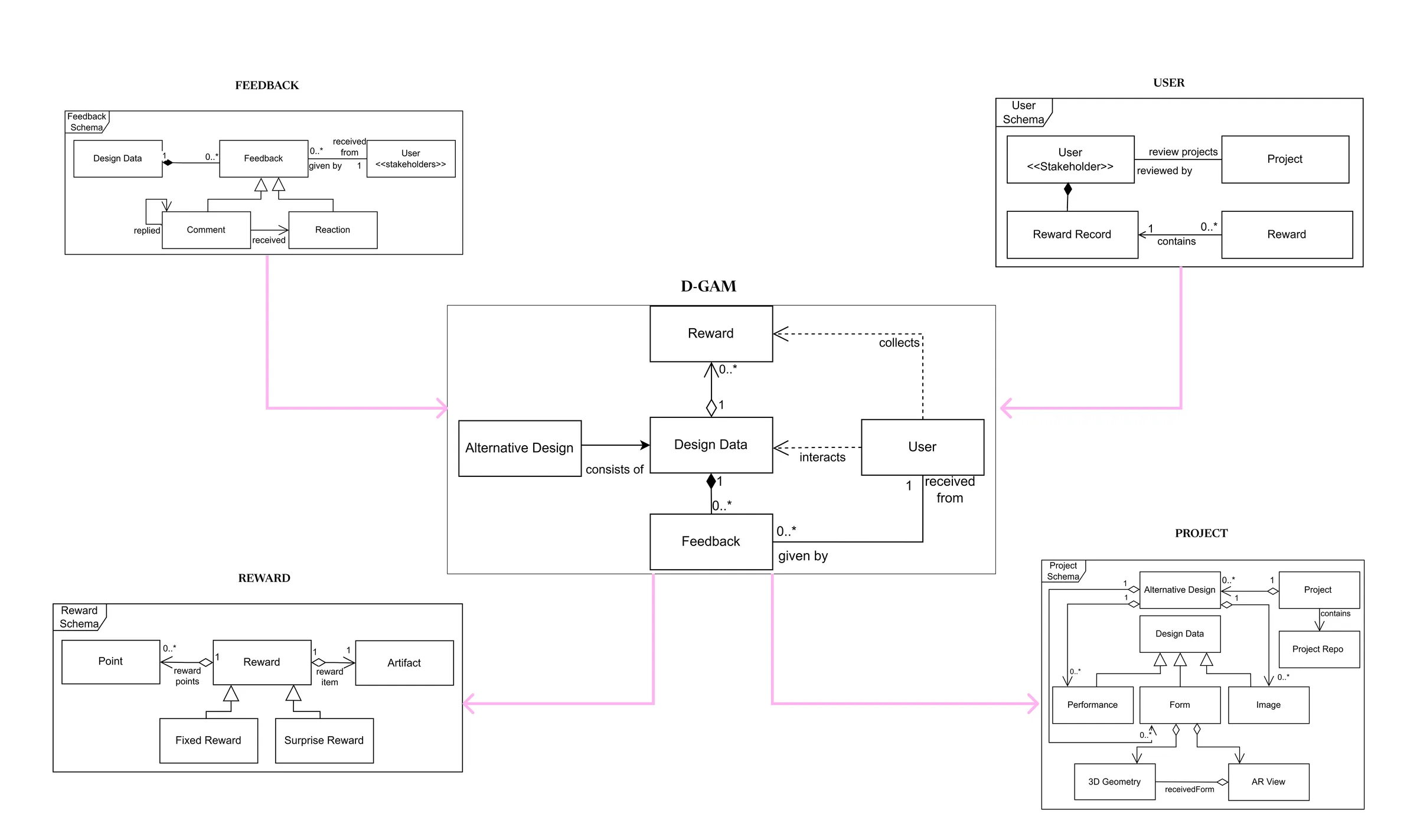
The D-GAM framework — four schemas
D-GAM is built on four interrelated schemas. Each operates independently — meaning the reward logic, feedback model, project structure, or user tracking can each be modified without disrupting the others. This is what makes the framework adaptable across different project types and engagement goals.
Framework in action — four scenarios
To demonstrate adaptability, four scenarios were designed using the same four schemas — each with a different project context, stakeholder profile, and reward configuration.
| Scenario | Context | Goal | Reward type |
|---|---|---|---|
| S1 · In-depth form exploration | Mixed-use building — three design alternatives posted for visual feedback | Encourage deep exploration of form and AR views, with detailed qualitative feedback | Fixed + surprise |
| S2 · Full participation and reward redemption | University café — designers need structured feedback across all data and form views | Ensure users complete the full review including a final survey before reward is unlocked | Fixed only |
| S3 · Social participation and community interaction | New school — designers seek community dialogue and collective sentiment on proposals | Encourage discussion and reply chains between participants rather than individual review | Surprise only |
| S4 · Full exploration for points accumulation | Any project where full exploration of all views is the primary participation goal | Increase task completion through direct redeemable rewards tied to exploration depth | Fixed only |
Re-designed prototype
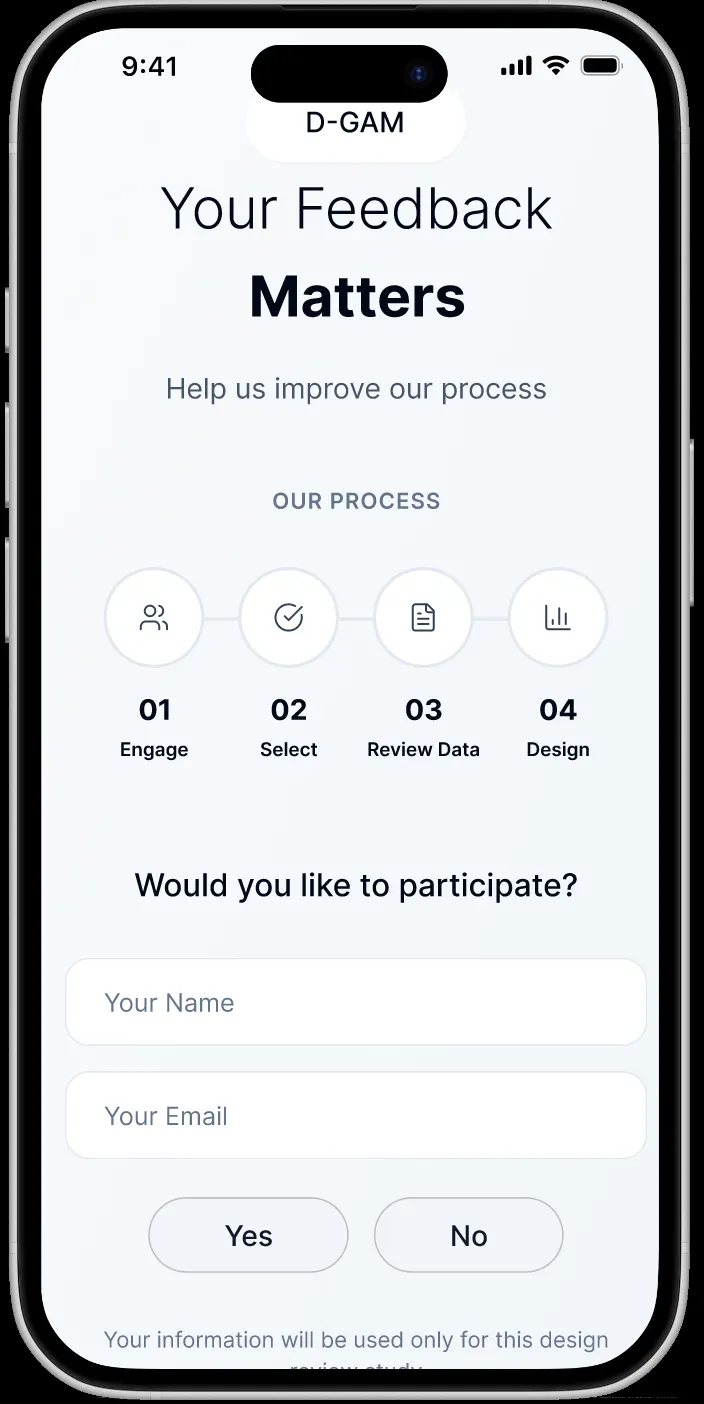
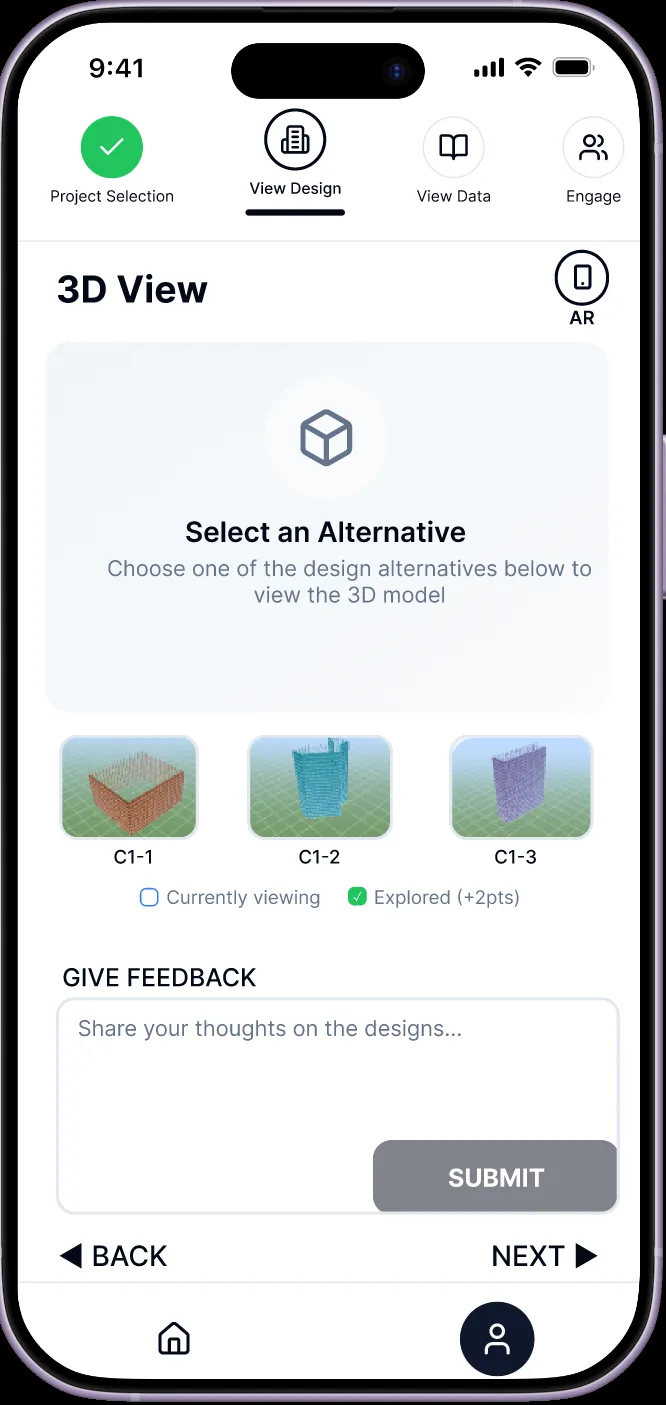
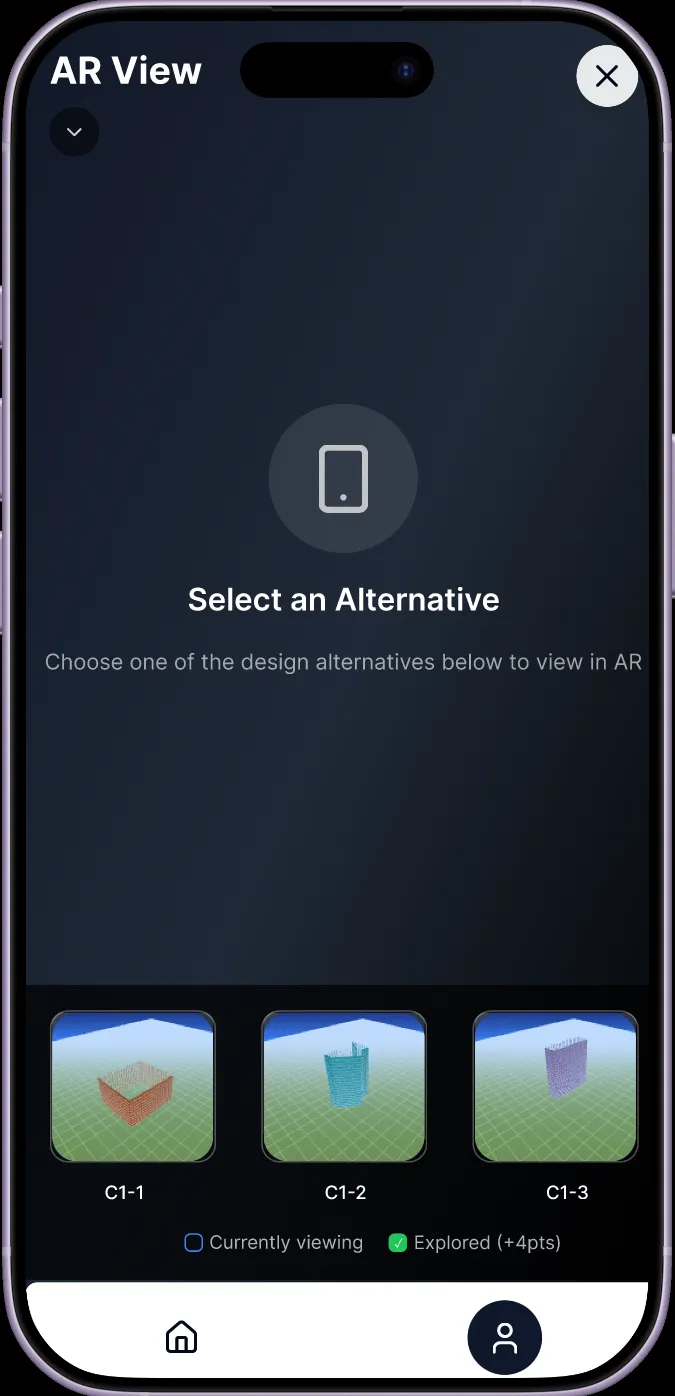
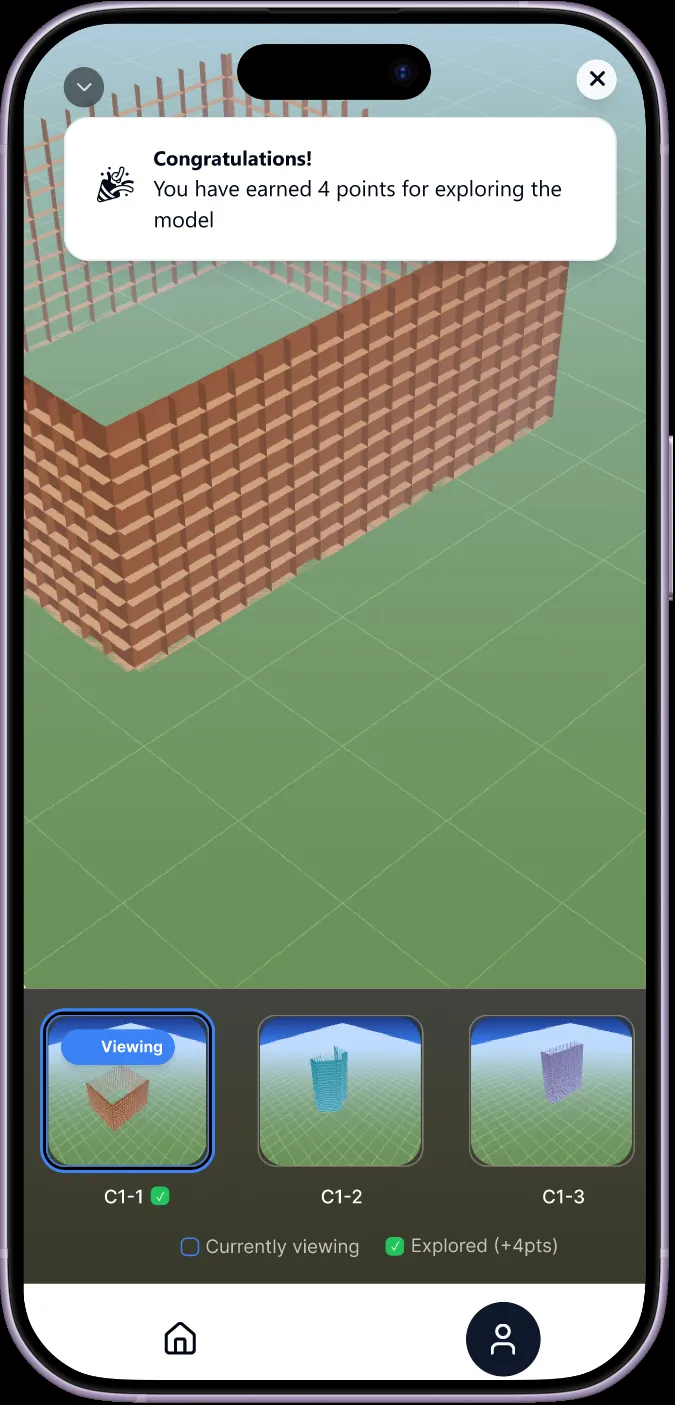
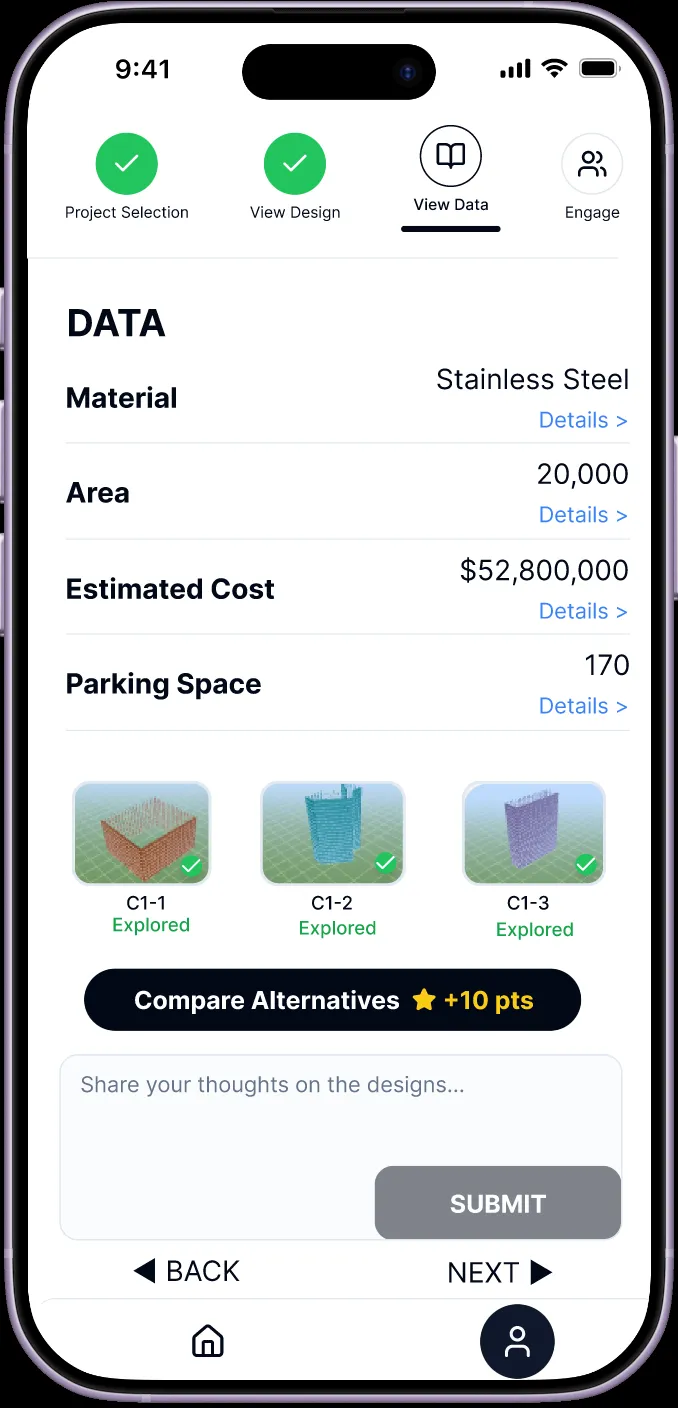
The redesigned prototype implemented the framework across two live project scenarios — a mixed-use building and a university café — each configured with different reward logic and navigation models. This video demonstrates the first case scenario.
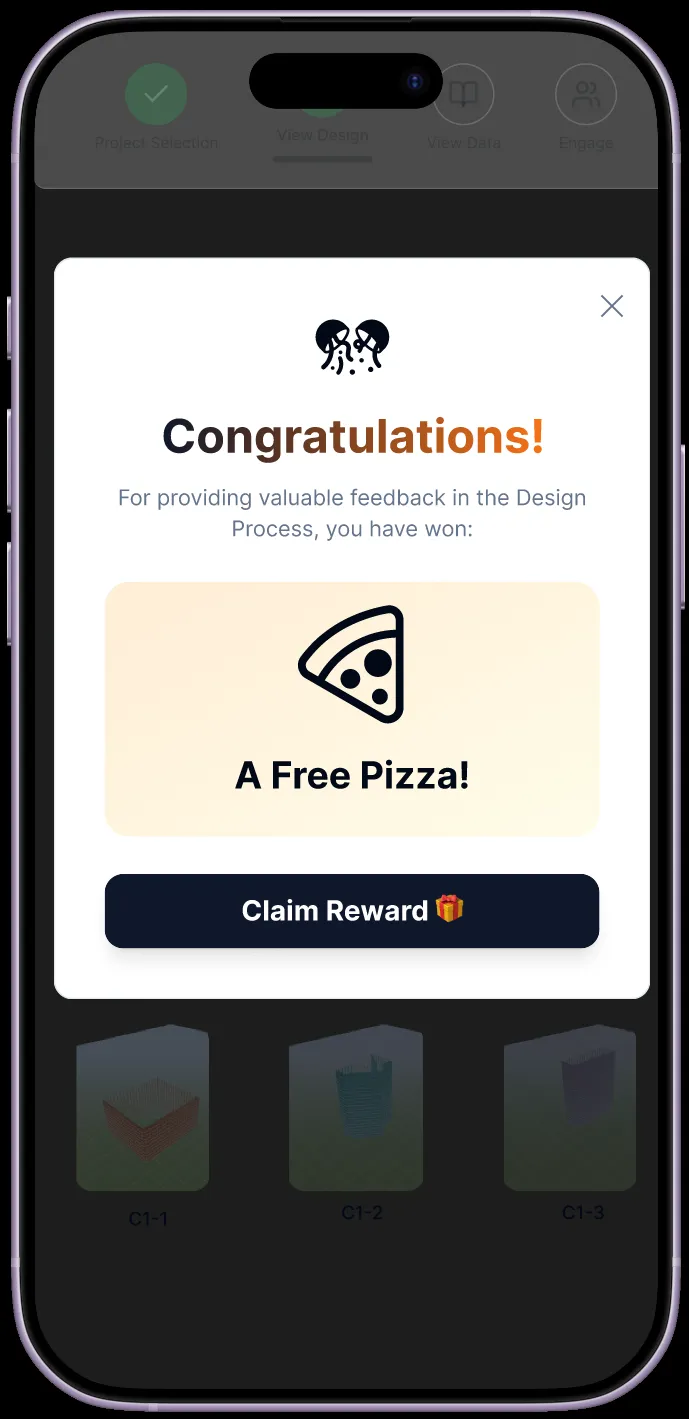
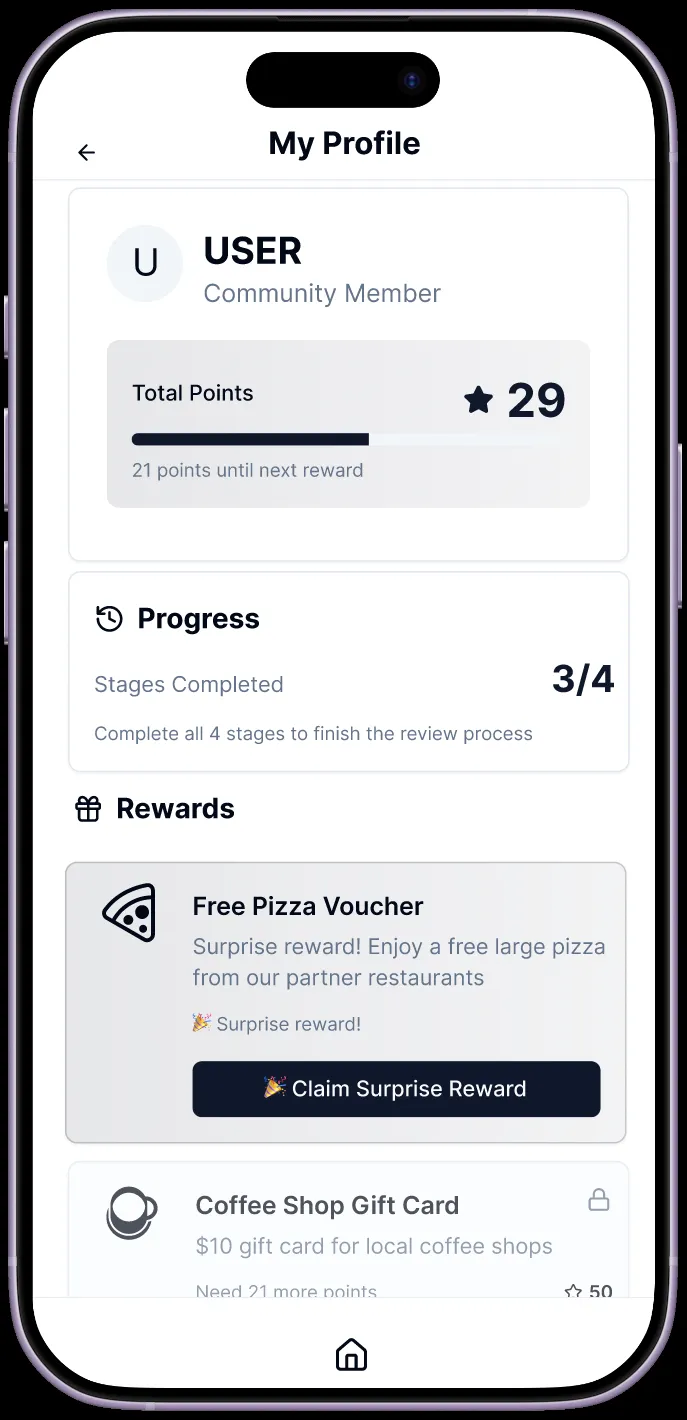
Users move freely rather than through a fixed sequence. Rewards are declared upfront. Feedback can be given per view or combined at the end, which was the single most requested change from the focus group.
04. User Study
Participants
Ten participants were recruited through purposive sampling across design, technology, and academic backgrounds — none affiliated with the D-GAM project. Sessions ran remotely via Zoom, lasting 40–45 minutes each. Each participant interacted with two scenarios, completed a post-task semi-structured interview, and filled out a System Usability Scale survey. They ranged from entrepreneurs and developers to designers, teachers, and an architect, aged 25 to 32.
05. Results
Achieved Results
The redesign is where the framework earns its claim. The task-based prototype scored below the industry average; the schema-driven redesign scored above it.
- 67.46
- Phase 02 · focus group · n=7
- 76.0
- Phase 04 · final study · n=10
- +8.54
- Improvement across iterations
- 90%
- Increase in user engagement
Grade D · Needs improvement — below industry average, structural redesign required
Grade B — above industry average, framework redesign validated
The gain that validated the shift from task-based to task-free
Tentative, based on the 9/10 participants who found the redesign more motivating
Key findings of thematic analysis
- 8/10
- Gamification guided the process
- 9/10
- Scenario 1 more motivating
- 7/10
- Flexibility and adaptability
- #1
- Surprise reward most engaging
Strongly agreed that game elements helped them navigate the review without confusion.
Combined incremental points and surprise rewards outperformed a single upfront fixed reward.
Agreed designers should be able to configure reward logic per project — validating the core premise of D-GAM.
Consistently identified as the most motivating element — more than progress bars or leaderboards.
06. Reflection
The next step is implementing the application with a larger pool of participants, and developing a working prototype — along with integrating AI for semantic analysis of feedback.
Three papers came out of this work, published at CAAD Futures, HCI International, and AHFE.